

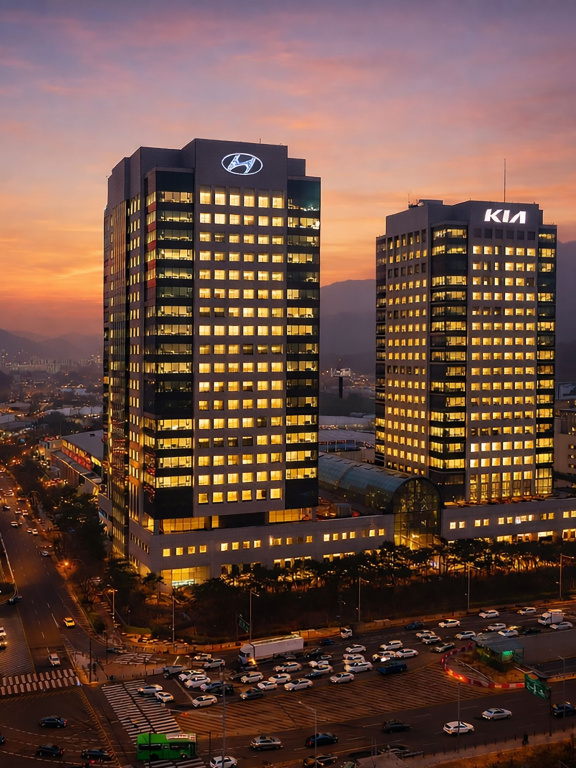
Hyundai Automobile Headquarters, Korea
A workspace defined by rhythm and restraint
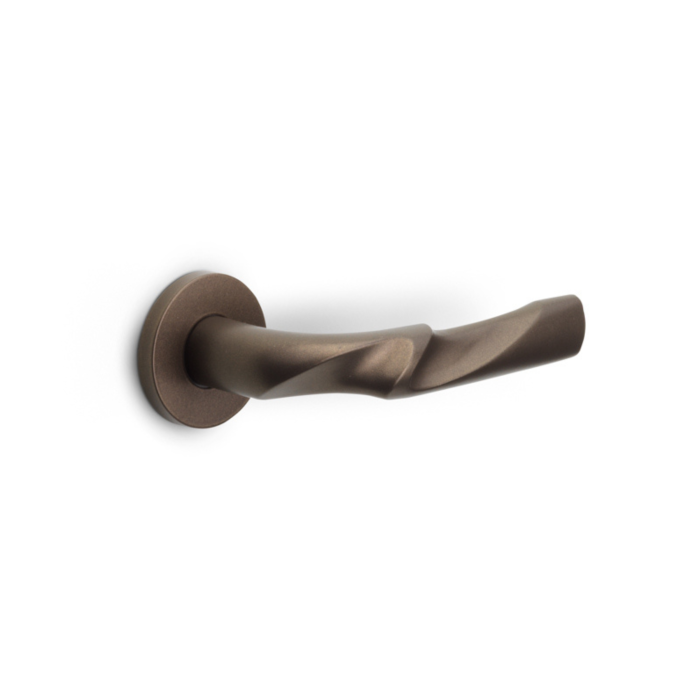
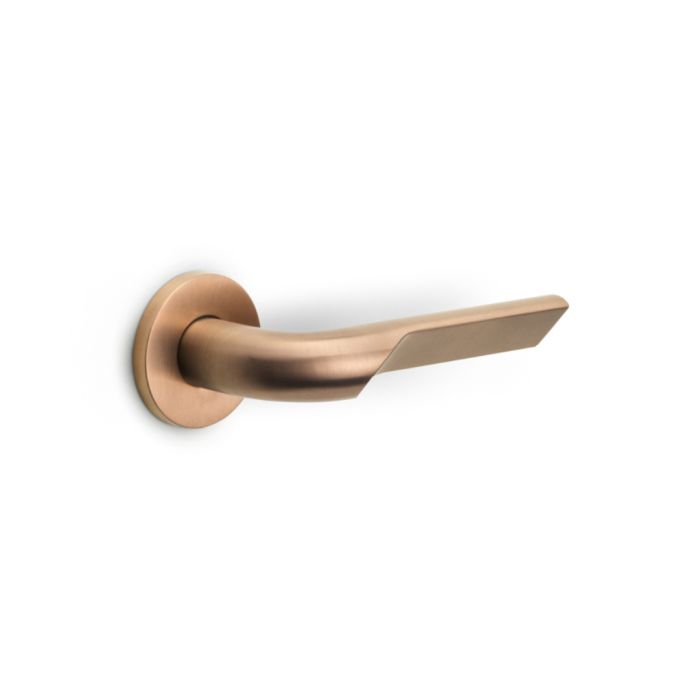
Within the Hyundai Automobile Headquarters in Korea, architecture is approached as a continuous experience rather than a sequence of isolated spaces. Movement plays a central role. Doors open and close throughout the day, marking transitions that are subtle yet constant. These repeated interactions shape how the environment is perceived over time, creating a quiet rhythm that unfolds through daily use. In this continuous movement, elements such as door hardware play an understated yet essential role, guiding each interaction with precision.
The design responds to this by prioritising clarity, proportion and consistency. Every element is considered in relation to the whole, allowing the space to remain composed despite its dynamic nature.
Design philosophy as a spatial framework
Innovation is embedded not as an addition, but as a driving force behind how spaces are structured, used and experienced. Communication, adaptability and long term performance form the foundation of this approach. Spaces are designed to support interaction and focus simultaneously, allowing different modes of working to coexist within a coherent structure.
Transparency as structure
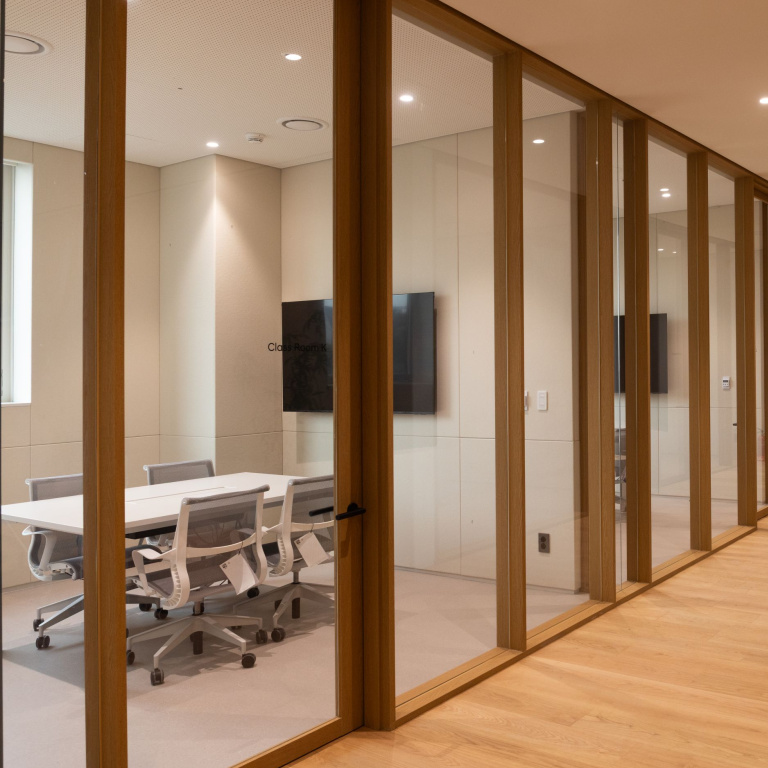
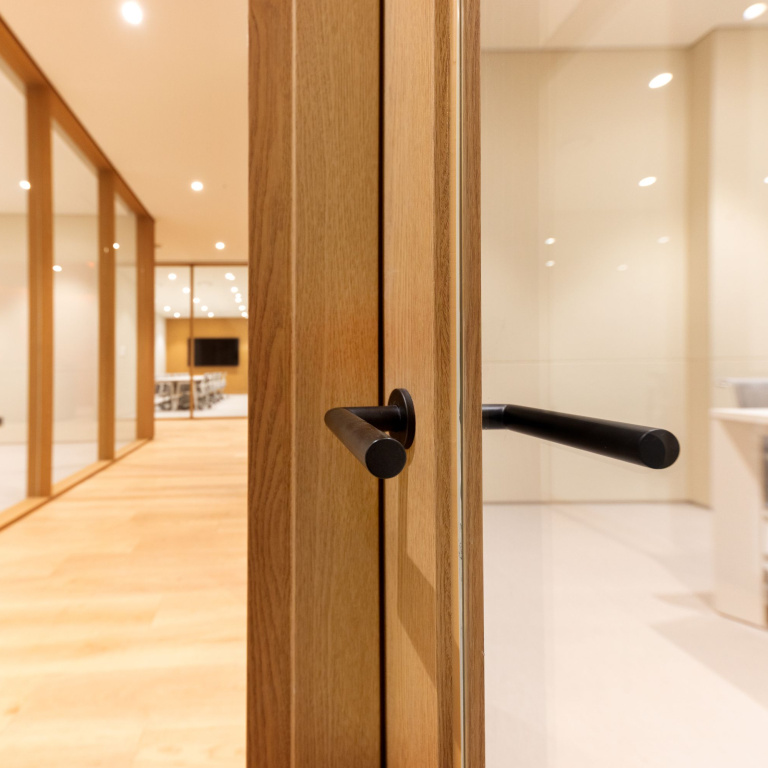
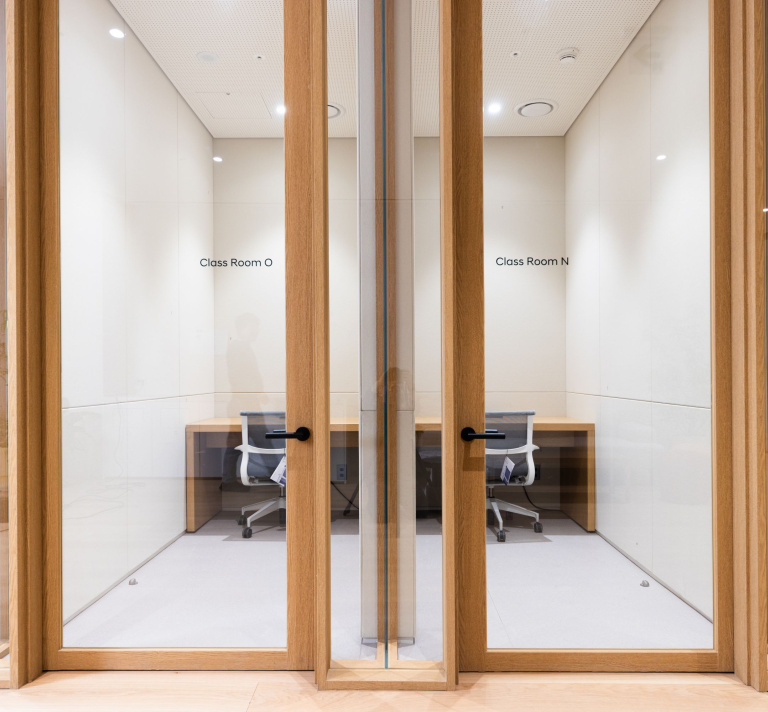
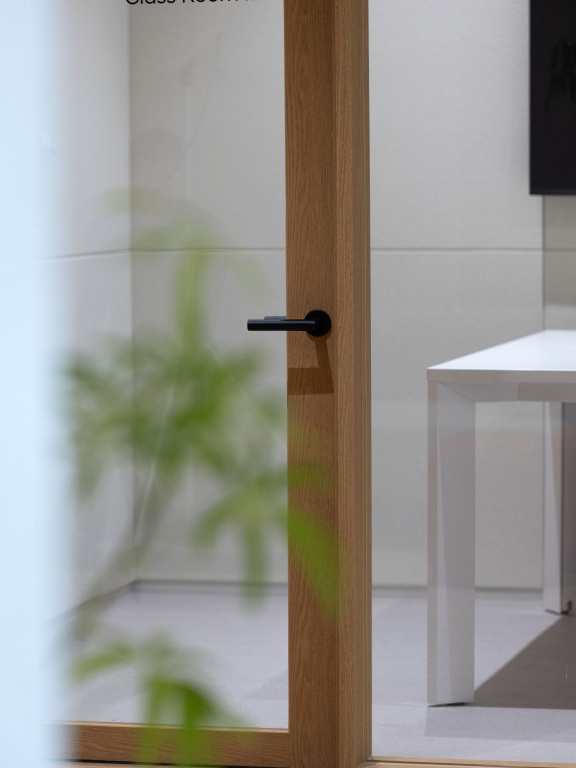
The interior is organised through a series of glass volumes framed in refined wood surfaces. These transparent layers define rooms without disconnecting them, maintaining visual continuity while offering functional separation. Light moves freely through the space, reinforcing a sense of openness and orientation.
This spatial hierarchy reflects the organisation of the building itself, where openness and interaction are encouraged, while more focused environments are positioned within clearly defined boundaries. Workspaces remain part of a larger architectural composition, while still supporting concentration and individual use.
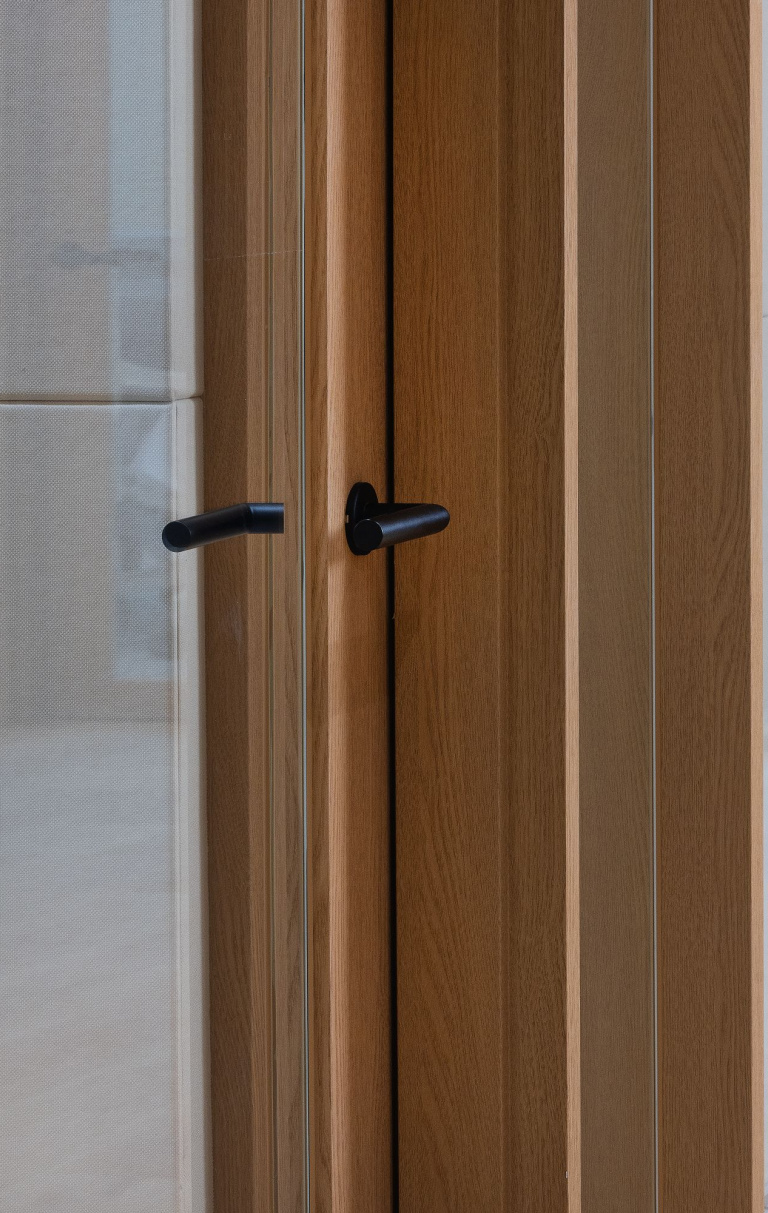
Along the corridors, repetition becomes a defining element, where frames, glass and hardware align into a continuous architectural rhythm.
Material coherence and controlled contrast
Material selection and environmental considerations are not treated as additions, but as integral drivers of the design. This integrated approach reflects a broader ambition to create environments that are not only efficient, but resilient and future ready. Daylight, transparency and natural textures contribute to a workspace that feels both efficient and responsive, aligning with Hyundai’s focus on forward thinking and performance.
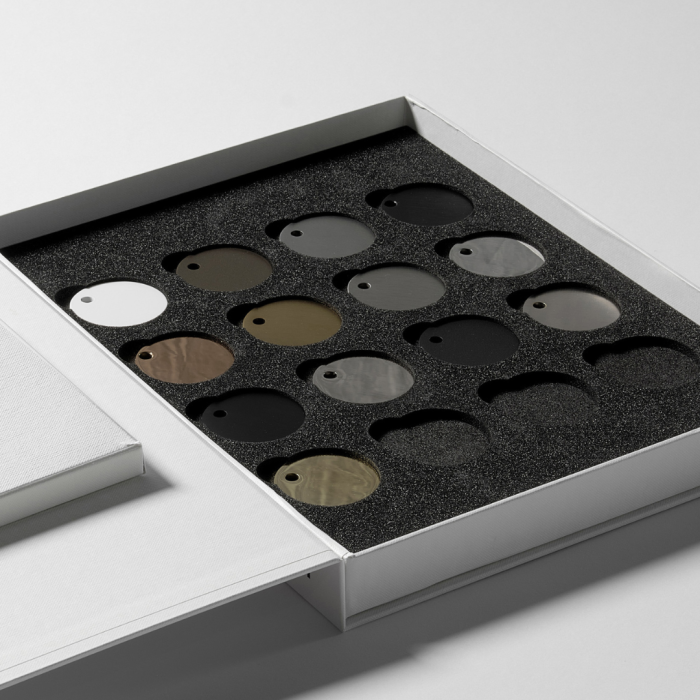
These accents bring definition to the space. They highlight points of interaction and reinforce the architectural lines without interrupting the overall harmony. The result is an environment where materials do not compete, but work together to create depth and balance.
FORMANI BASICS collection
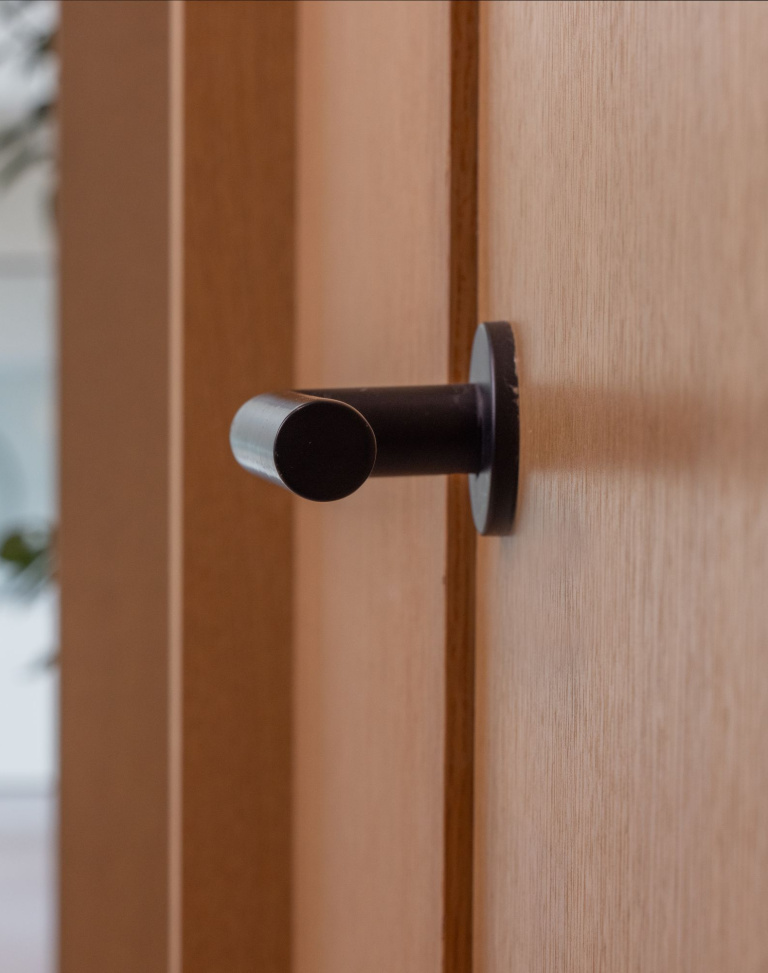
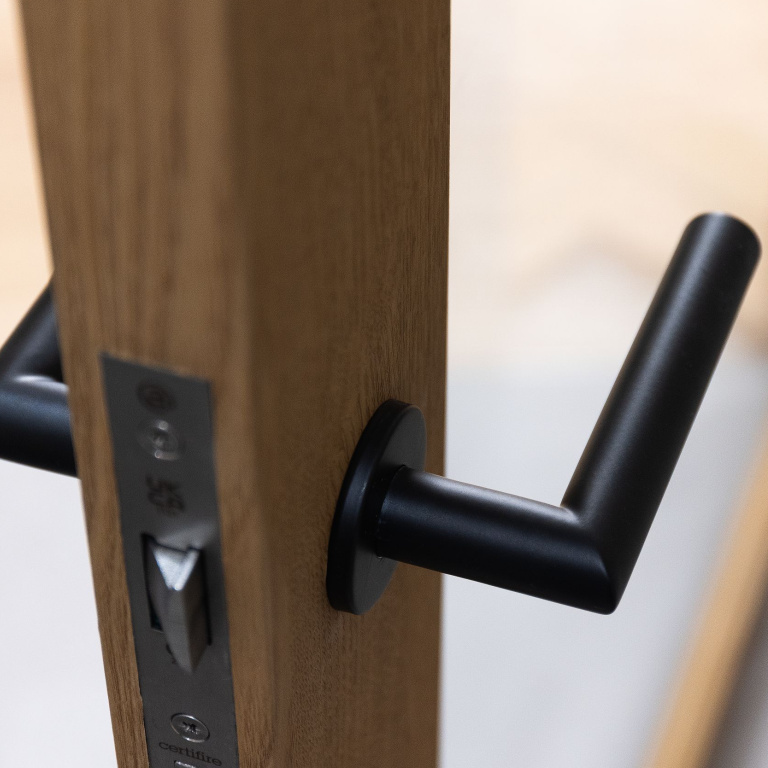
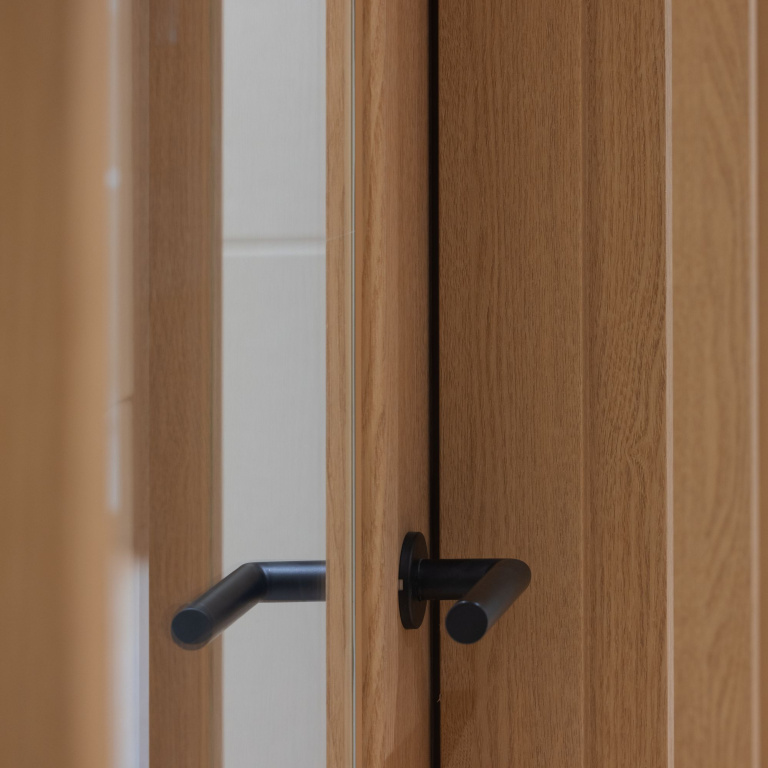
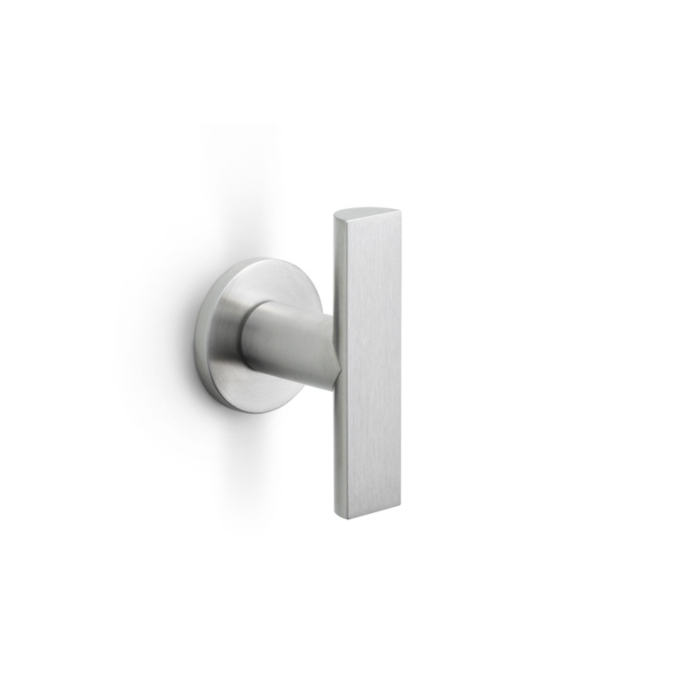
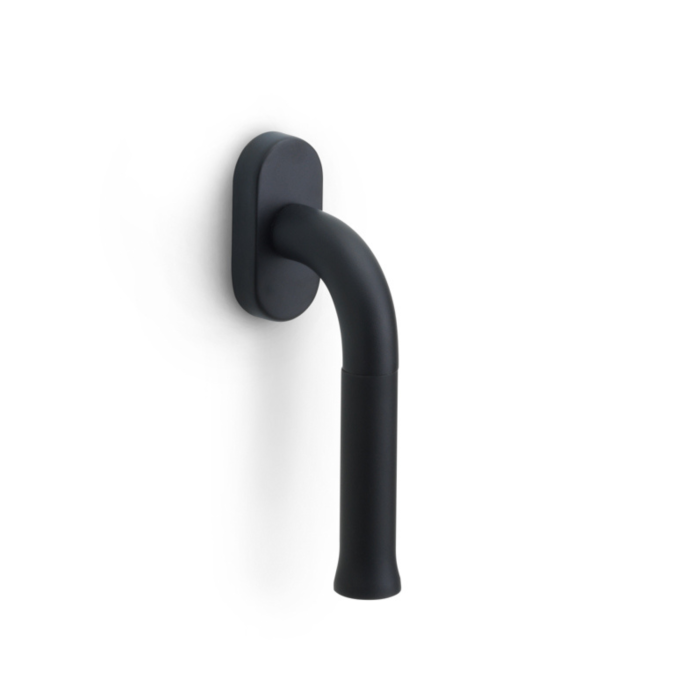
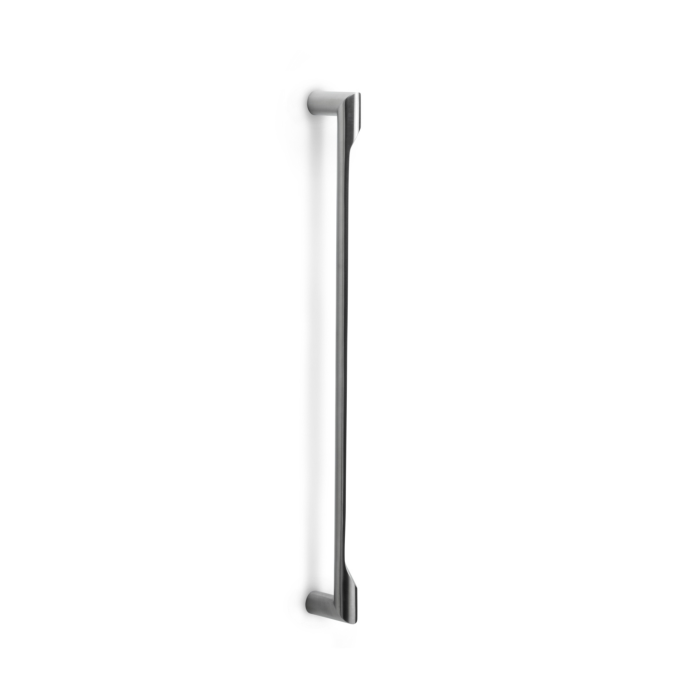
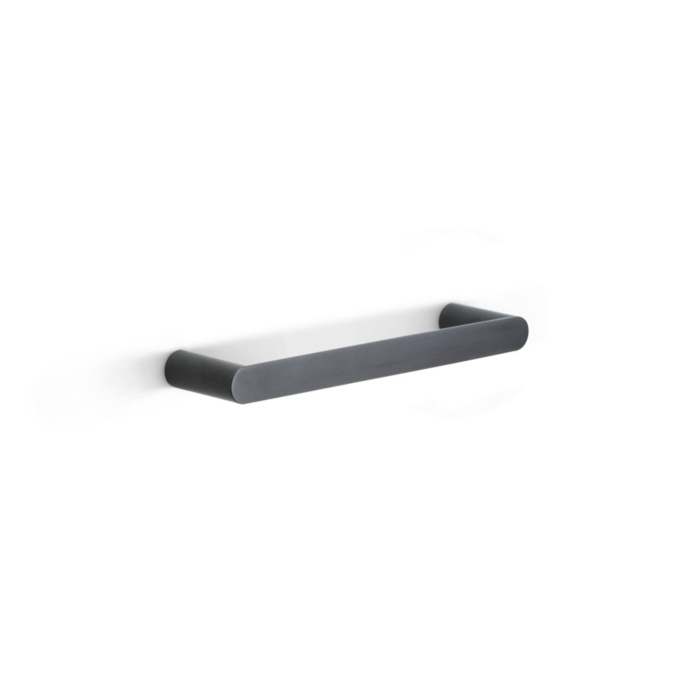
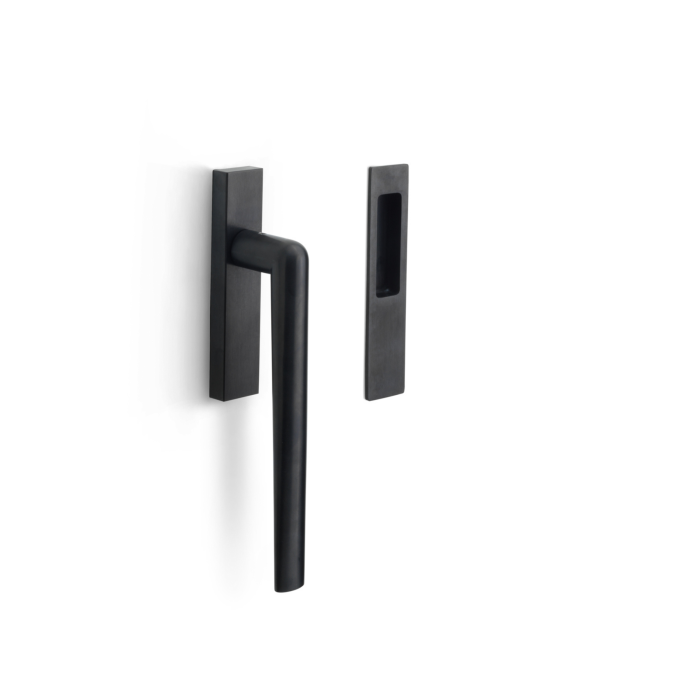
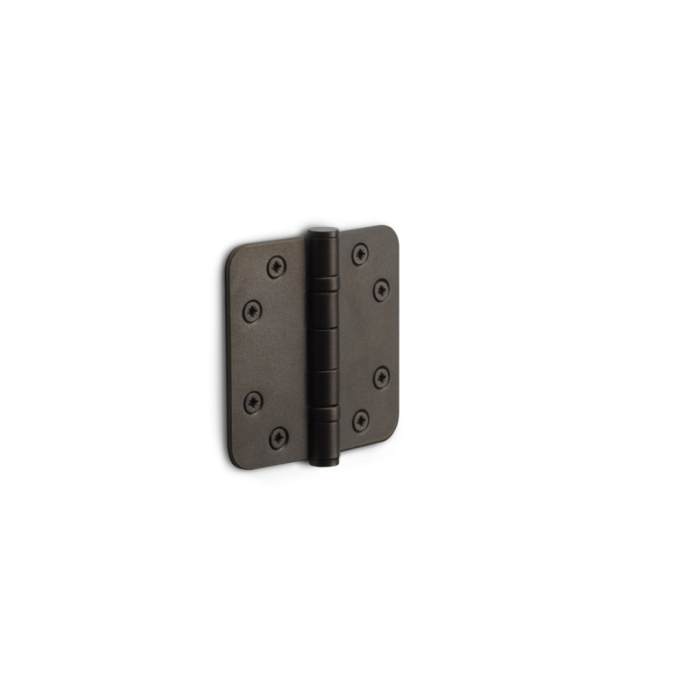
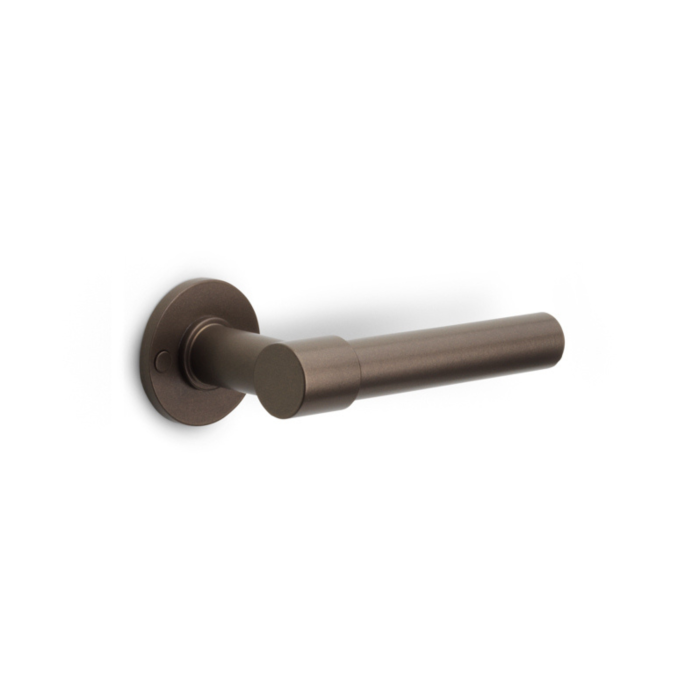
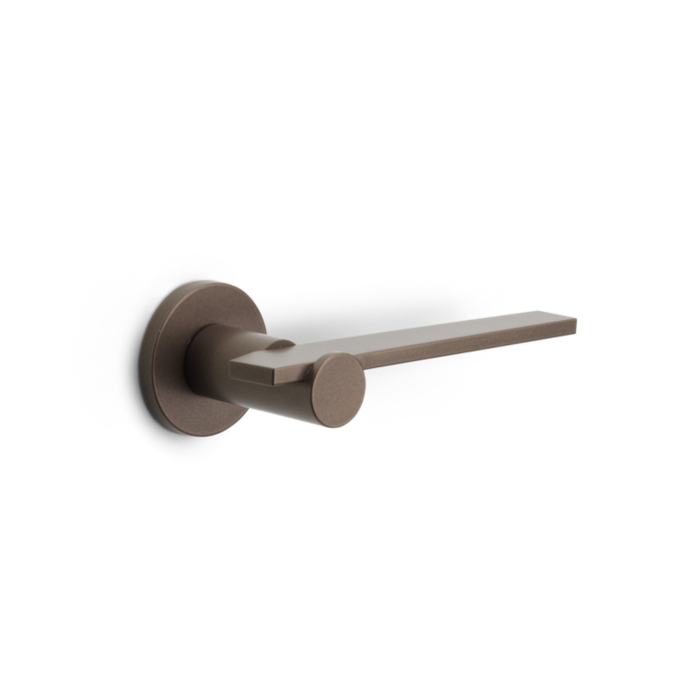
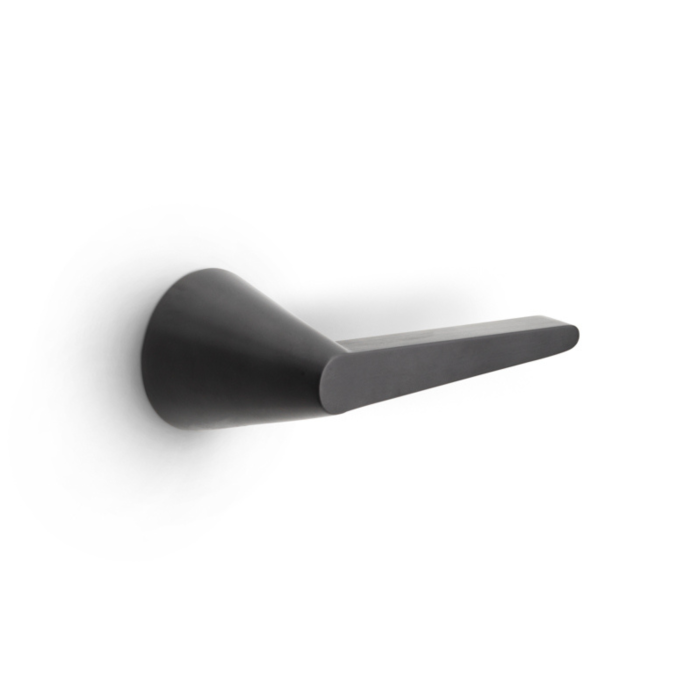
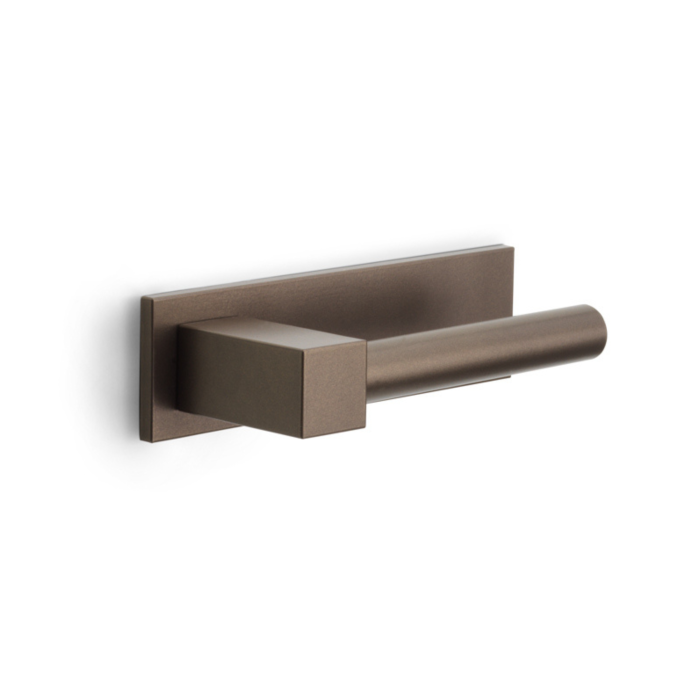
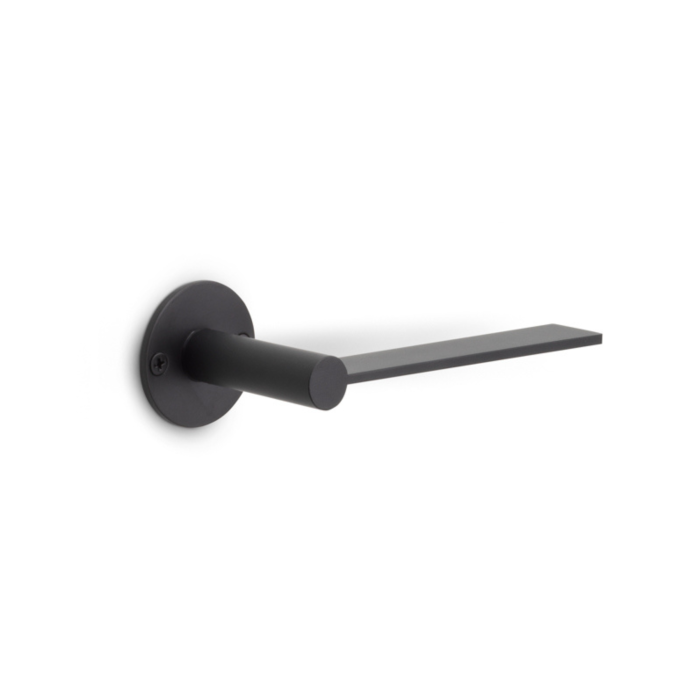
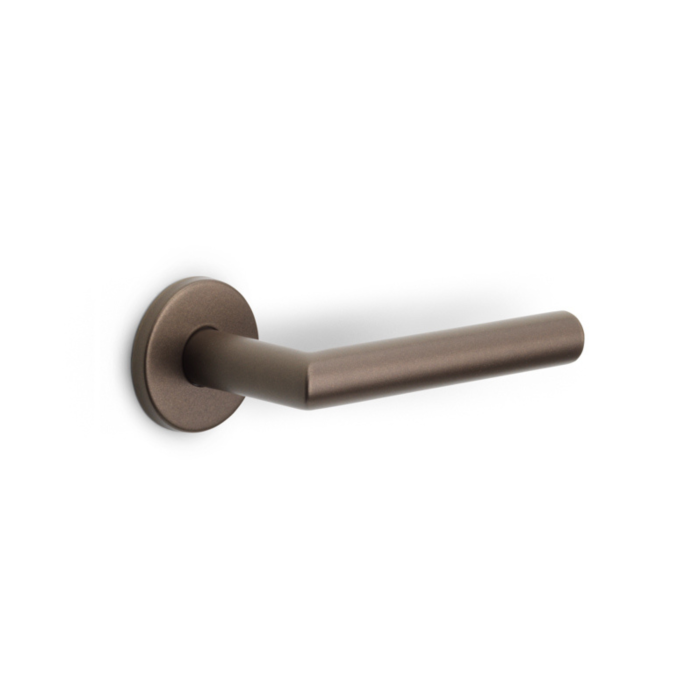
Within this carefully composed setting, the BASICS collection is integrated as a natural extension of the architecture. Positioned close to the material and reduced to its essential form, the hardware follows the logic of the space rather than standing apart from it.
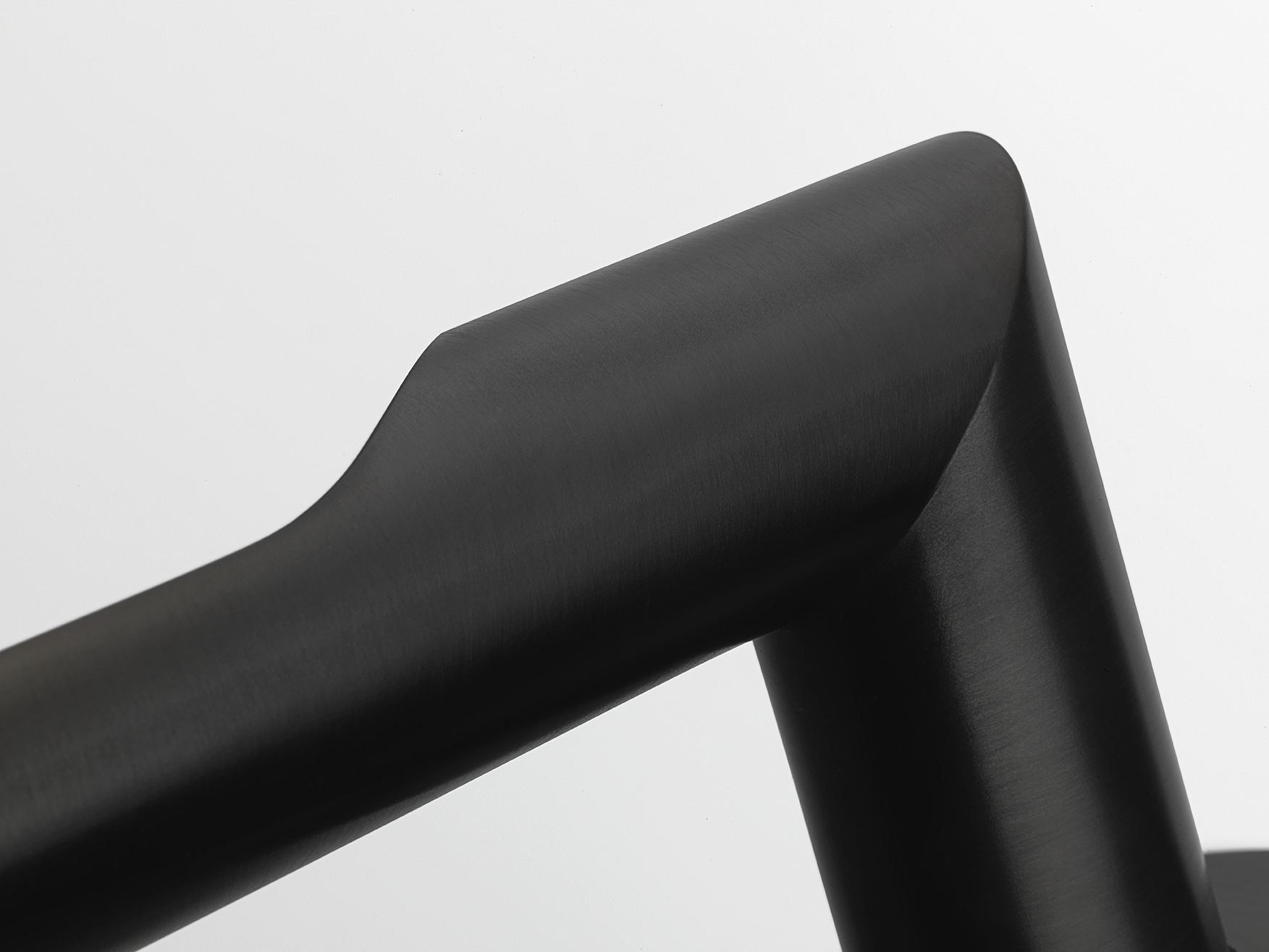
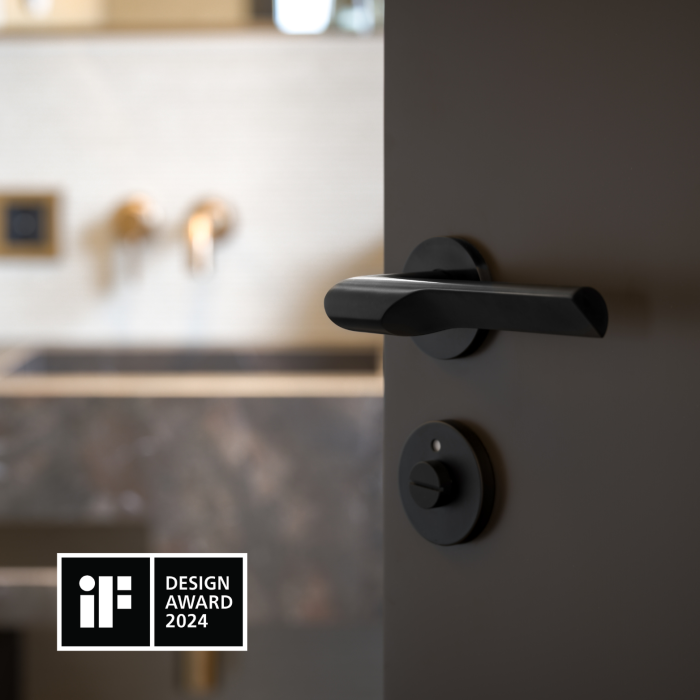
The cylindrical geometry and matte black finish introduce a subtle point of contrast against the wooden surfaces. At the same time, its restrained design ensures it remains part of the whole. Not as an object of focus, but as an element that supports use, rhythm and continuity.
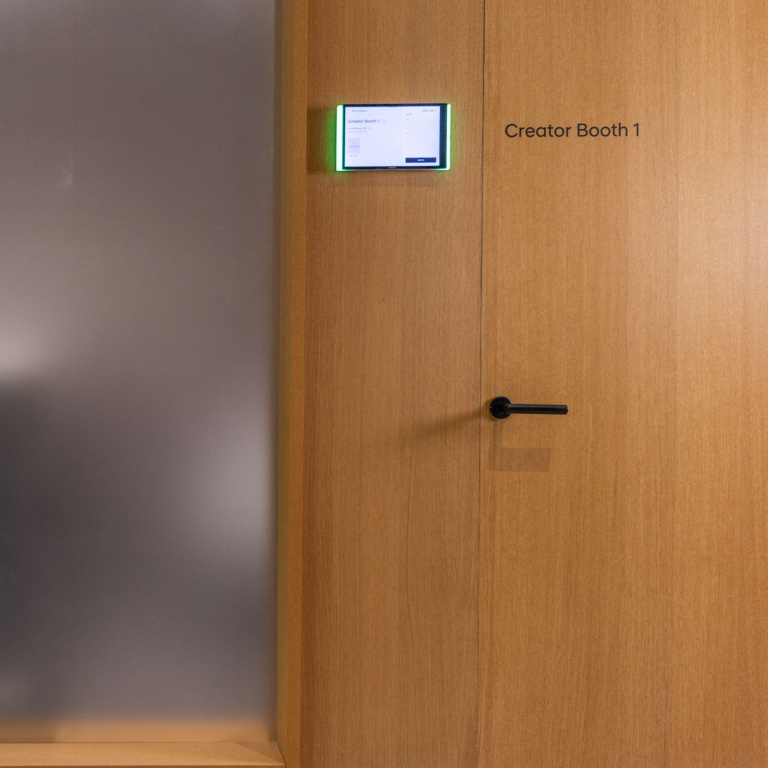
Through repetition across doors and spaces, the hardware contributes to a consistent spatial language. It reinforces the experience of movement, where every touchpoint aligns with the architectural intent.